
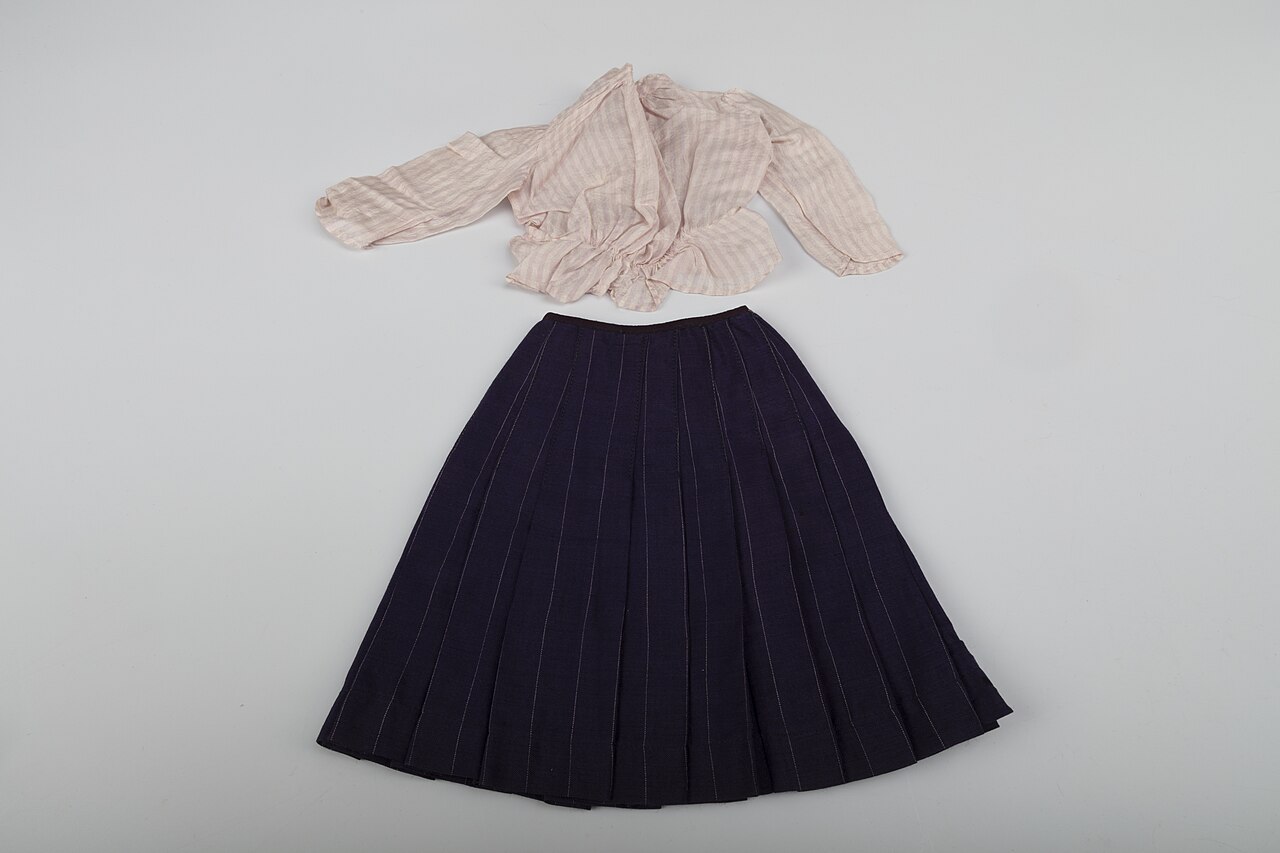
A midi skirt works for almost any setting when you get the proportions right. Use these five outfit formulas to adjust your hem, tuck and shoe choice for work or the weekend.
A midi skirt falls anywhere from just below the knee to the ankle, typically hitting at mid-calf. This intermediate length makes it adaptable across many settings, as it offers more coverage than a mini while allowing easier movement than a maxi. The challenge lies in managing proportions, since the hem crosses the wider part of the lower leg. How you handle the hem position, top styling and shoe choice determines whether the skirt reads as office-appropriate or weekend-casual.
1. Start With Where the Hem Lands and Tuck the Top
A midi ends just below the knee to mid-calf, while tea length grazes the lower calf to the ankle. The most important rule for a midi hem is to position it at a narrower section of your leg, avoiding the widest part of the calf. A hem that stops at the fullest part creates a visual break right there and makes the leg appear shorter. Positioning the hem slightly below that fullest point, where the leg begins to taper toward the ankle, creates a lengthening effect. Petite frames should choose a shorter rise skirt and a shoe with some height to maintain leg length, while taller frames can comfortably wear longer midi styles.
Once the hem is right, remember that midi refers to length, not shape. A fluid slip skirt and a crisp A-line skirt call for different tops, even though both may end at mid-calf. The amount of fabric can vary significantly between skirts of the same length. Balance the top with the skirt’s volume: choose a fitted, tucked top for fuller skirts, and a roomier shirt for slim, straight skirts. Secure a full tuck on full and pleated skirts, and apply a front tuck on denim and slip styles. When tucking a tee, insert one to two inches of fabric into the waistband so the waist appears defined rather than bulky. For skirts with volume, maintain roughly a 1:2 ratio of fitted top to skirt fullness for a polished result. A thin leather belt positioned at your natural waistline can further define the shape without making the torso appear shorter.
| Skirt Cut | Top Pairing | Tuck Method |
|---|---|---|
| Full or A-line | Fitted or waist-length top | Full tuck |
| Slim or straight | Roomier top | Front tuck |
| Pleated | Fine knit | Full tuck |
| Slip or bias-cut | Chunky knit or matte top | Half tuck |
2. Straight Midi, Knit Tee and Sneakers for Weekends
A straight or fluid midi hangs closer to the body and pairs well with a roomier top if you define the waistband. For an easy weekend look, pair a straight midi with a knit tee and retro sneakers or ballet flats. On most mid-calf skirts the hem measures approximately 28 to 32 inches from the waist, so a sneaker with 1 to 1.5 inches of sole maintains balanced proportions. A boxy tee works here with a front tuck rather than a full tuck, preventing fabric from gathering at the waistband.
For cooler or rainy summer days, layer the skirt with a casual jacket, sturdy footwear and a basic tank. As temperatures rise, switch to open sandals, a halter-style top or a loose woven shirt for a comfortable, laid-back feel. For more simple weekend variations, our weekend outfit formulas show how to expand basics into a full week of looks. This formula works well for everyday tasks or a relaxed office environment, and the flat shoes keep the look grounded.
3. Pleated Midi With a Fine Knit and Ankle Boots
Pleats add vertical lines, yet they also bring extra fabric to the hip and hem area. That means the top half needs one clean, fitted piece to steady the look. A fine knit or fitted long-sleeve top provides balance. A snug black top creates a simple background that lets the skirt take center stage, and can be fully tucked in to emphasize the skirt’s shape. For colder weather, add thick tights and consider a cropped or sleeveless sweater layered over the top.
For footwear, ankle boots are a debated choice. Some stylists suggest avoiding ankle boots because they cut off the natural line of the leg. However, Chelsea-style boots with a narrow shaft that ends just above the ankle can work without visually shortening the leg when the midi hits mid-calf. Shoes anchor the lower portion of the outfit since the midi hem typically falls between the knee and ankle, making footwear shape and ankle proportions especially noticeable. Simply changing from ankle boots to shoes with substantial straps can make an outfit appear elongated or visually segmented. This combination easily shifts toward the office. For more guidance on dressing for the office, our business casual outfits offer ideas that actually work. Keep any belt at your natural waist rather than letting it slide down toward the hips, where it can make the skirt read like a dropped-waist style.
4. Satin or Bias-Cut Midi With a Chunky Sweater for Evening
A slip midi drapes fluidly and typically has some shine, making it a strong choice for evening. Matte tops or knitwear create surface contrast against the smooth fabric. A bulky sweater worn with a bias-cut midi can look relaxed rather than heavy when you control how much fabric goes into the waistband. A half-tuck at the front provides shape without competing with the sweater. Pushing an entire thick sweater inside the waistband adds volume and creates awkward folds, so a half-tuck works better.
For colder weather or evening events, you can opt for knee-high boots that keep legs warm while creating a sense of drama and depth. On warmer fall days, ballet flats or retro sneakers work for a dressed-down look, but the combination of a fluid skirt and chunky knit leans more toward evening. If the skirt has a front or side slit, it introduces movement and a vertical element when the hem sits low.
5. Add a Third Piece and Check the Fit Before You Buy
A third piece like a blouson or biker leather jacket completes the look. Leave it unfastened, or pick a style that stops near your waist. A blazer that falls below the hip or a tailored jacket tends to compete with a full midi. A jacket that ends above the skirt hem, such as a cropped style or an open trench, works better. Denim and leather skirts carry more visual weight, so they need shoes with enough heft to match. For more on proportions and how volume changes a look, our guide to styling wide-leg pants explores these principles thoroughly.
When shopping for a midi skirt, remember a defined waist is non-negotiable at this length. A midi without waist definition appears as a column of fabric rather than a shaped silhouette. Check the fitting room to ensure the hem hits at the narrow part of your calf and that the waist sits at your natural waistline. If the skirt is pleated, check the pleat width to ensure it does not add unwanted volume at the hips.
Styling tip
A thin leather belt at your natural waist can define the shape on a midi skirt without shortening the torso.
Style notes
- A midi skirt hem should end where the leg narrows, never at the widest part of the calf, to avoid shortening the leg line.
- Match your top to the skirt’s volume: a fitted top balances a full skirt, while a looser top suits a straight skirt.
- Tuck depth matters; fully tuck fine knits into full skirts and use a half-tuck for chunky sweaters over slip skirts.
- Shoe choice changes the setting; sneakers keep it casual, while ankle boots with a slim shaft can work for the office.
- A defined waist is non-negotiable for a midi skirt to prevent the outfit from reading as a column of fabric.
Style Q&A
What is the correct hem length for a midi skirt?
A midi skirt ends between the knee and the ankle, usually at mid calf. The hem should end where your leg narrows, just below the fullest part of the calf, to lengthen the line of your leg.
How do you tuck a top into a midi skirt?
Tuck in fully on full and pleated skirts to define the waist. Use a front tuck on denim and slip skirts. For a chunky sweater, use a half-tuck at the front to give shape without adding bulk.
What shoes work best with a midi skirt?
Sneakers and ballet flats work for casual looks. Ankle boots with a slim shaft that hits above the ankle can work, though knee-high boots are a safe choice for colder weather as they do not cut off the leg line.
Can you wear a midi skirt to the office?
Yes, a midi skirt can work for the office. Pair a pleated midi with a fine knit and ankle boots, or a straight midi with a tucked button-down. A defined waist is key for a polished look.