
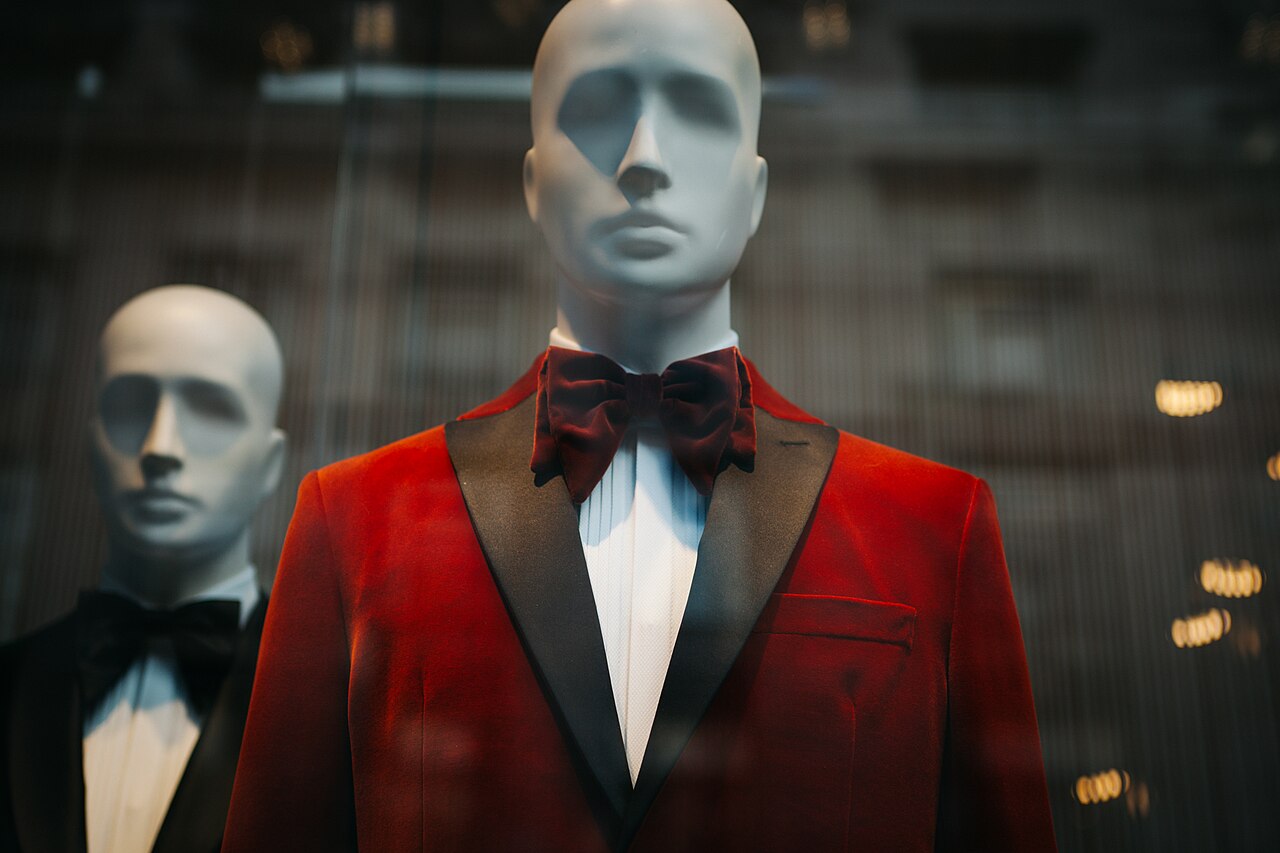
Rental menus and tailor lists assume you already know what a peak lapel or a cashmere stripe is. Here is the vocabulary, in plain English, so you can order the right thing.
Formalwear has its own language, and rental shops and tailors speak it fluently. If you have never shopped for a tuxedo or rented a morning suit, terms like barathea, grosgrain and cutaway can feel like a test you did not study for. This glossary covers the words you are most likely to see and how they map onto the dress code printed on your invitation.
Suit, Tuxedo and Morning Suit: The Big Three
Most formalwear vocabulary sorts into one of three garment families. Learn these and the rest of the menu starts making sense.
- Suit: A jacket and trousers cut from the same material, with an optional matching waistcoat. A two-piece has jacket and trousers; a three-piece adds the waistcoat. Suits range from casual to very formal depending on fabric and color. For how suits fit into office dress codes, see our primers on business formal and business professional.
- Tuxedo: A suit distinguished by formal trim, most often satin or grosgrain facings on the lapels, buttons and a stripe down the trouser leg. It is traditionally black or midnight blue, and it is evening wear, worn after sundown or 6 pm, whichever comes first. Outside the US it is usually called a dinner suit.
- Dinner jacket: A formal jacket in the tuxedo shape but made from colorful cloth such as burgundy or bottle green velvet; a dinner suit keeps matching black or midnight blue jacket and trousers.
- Morning suit: The traditional formalwear for daytime events, built around a cutaway jacket rather than a standard suit coat. It is the counterpart to the tuxedo: morning dress for daytime, tuxedos for the evening.
- Cutaway (morning coat): The single-breasted jacket at the heart of morning dress, cut so the front slopes away below the waist, usually in black or dark gray, sometimes with a subtle herringbone texture. The name traces to 19th century gentlemen riding in coats with cutaway fronts.
- Tailcoat: The evening counterpart to the cutaway, a coat with a short front and two tails at the back. It is the jacket of white tie, the most formal evening dress code, and a tuxedo ranks just below it. The name tails sometimes applies to morning coats too, since both have a swallowtail at the back.
- Black tie: The dress code that calls for a tuxedo. White tie is one step up and calls for a tailcoat. Both were designed to leave behind the work clothes of the day.
Between the world wars the tuxedo largely replaced the tailcoat as standard evening wear, and after World War II the business suit became acceptable at semi-formal and even some formal gatherings. That left the tuxedo as America’s default formal choice, while morning dress all but disappeared.
Collar and Lapel Terms You’ll See on Rental Menus
The lapel is the most distinguishing feature of a tuxedo, and rental menus lead with it.
- Lapel: The folded flap of cloth running from the collar down the front of a jacket. On a suit it uses the jacket’s own fabric; a tuxedo lapel gets a satin or grosgrain silk covering instead, usually matching the buttons and the trouser stripe.
- Notch lapel: The lapel with a small notch where it meets the collar, the style found on most business suits. On a tuxedo it reads as the most conservative option.
- Peak lapel: A lapel whose point extends upward toward the shoulder. It is the most classic tuxedo choice, associated with weddings and black tie galas. Most peak lapels run about 3.5 to 4.5 inches wide, and 3.5 to 4 inches is a common target.
- Shawl lapel: A lapel with no notch or point, just a smooth rounded curve from collar to button. It is the oldest tuxedo lapel, going back to the first dinner jackets, which borrowed their look from the smoking jacket near the end of the 19th century, and it gives a soft, old-Hollywood line.
- Facing: The fabric covering the lapel. Satin is smooth and shiny; grosgrain is slightly ribbed, less lustrous, and generally considered the more refined of the two.
- Barathea: A fine pebbled weave common in tuxedo cloth, though twill, plain and fine herringbone weaves also appear. Black wool or wool-mohair blend is the norm.
- Midnight blue: A very dark blue that is fully correct for a tuxedo, an equal to black.
- Mohair: A strong, coarse fiber from the Angora goat. A wool and mohair blend is a fine tuxedo cloth: lightweight, crease resistant, matte. Cheaper rentals lean on polyester, which looks shiny and plastic-like, so ask what the blend is.
- Wing collar: A shirt collar with pointed tips that stand up, framing a bow tie. Traditional versions are white and detachable, and they pair with formal ascots in morning dress.
- Buttoning stance: Where and how a jacket fastens. Single-breasted tuxedos most correctly have one button; double-breasted tuxedos usually have two or four. Suits typically carry two or three buttons, with shorthand names like 3-roll-2 or 6×2 describing how many fasten.
Lapel width should balance your build: a broad frame and face pairs with a wider lapel, a narrower frame with a slimmer one. A too-narrow lapel is one of the most common tuxedo mistakes.
Styling tip
Rent fabric, not just fit. Ask what the tuxedo cloth is made of. A wool or wool-mohair blend with a matte finish photographs better than a shiny polyester blend, which looks cheap under event lighting.
Waist Coverings: Cummerbund, Vest and Waistcoat
Formal trousers are not worn with a belt, so something else covers the waistband.
- Cummerbund: A broad sash worn folded and wrapped around the waist over the shirt, paired with a tuxedo in place of a vest.
- Waistcoat: The formal term for a vest, worn over the shirt and under the jacket. It is part of a three-piece suit and, in morning dress, not optional. It can be single- or double-breasted.
- Dove gray and buff: Traditional morning waistcoat colors. Buff is a chamois yellow; gray or buff are the classics, though tasteful reds and blues appear too.
- Suspenders (braces): Straps worn over the shoulders to hold up trousers. With a morning coat you never wear a belt, only suspenders, which keeps the cutaway front clean.
- Cashmere stripe: The popular striped pattern on morning suit trousers, in black, charcoal or gray with a fleck of white. Solid trousers or small patterns like houndstooth also work, as long as there is contrast with the coat. Tradition suggests keeping a morning ensemble to two colors.
Shirt, Stud and Neckwear Vocabulary
Formal shirts and neckwear carry their own terms.
- Dress shirt: A crisp formal shirt, white for tuxedos and morning dress, and the standard partner to a black bow tie.
- Studs: Small decorative buttons that replace ordinary shirt buttons on formal shirts and swap in and out.
- Cufflinks: Fasteners for French cuffs, the folded shirt cuffs that close with a link rather than buttons.
- Bow tie: The neckwear of black tie, traditionally black. Skip the pre-tied version if you can practice a self-tie.
- Ascot (cravat): A wide, formal neck scarf historically worn with a white detachable wing collar and a pin. It is named for the Royal Ascot races, where it was once obligatory with morning wear, though the Royal Ascot dress code no longer lists it as an option. Genuine formal ascots are hard to find.
Shoe and Accessory Terms for Formal Looks
- Oxfords: The formal lace-up dress shoe that pairs with both morning suits and tuxedos. Black oxfords are the traditional morning dress choice.
- Top hat: The dark formal hat traditionally worn with a morning suit at very formal daytime events.
- Lapel pin: A small pin worn on the jacket lapel. Etiquette guidance from Emily Post places a US flag lapel pin on the left lapel.
If your formal event is a wedding, accessories add up fast. Our breakdown of the real cost of being a wedding guest covers what to budget for beyond the outfit itself.
Fit and Alteration Words Tailors Use
A rental can be adjusted, but only if you know which terms describe what.
- Shoulder seam: The seam at the top of the jacket shoulder. A well-fitted shoulder lies flat, with the seam the same length as the bone beneath it and meeting the sleeve where your arm meets your shoulder.
- Vents: The slits at the back of a jacket. A classic suit jacket has a center vent or double vents.
- Rise: Where the trousers sit on the body. A mid-rise sits between the hip bone and the natural waist; formal trousers typically have a flat or pleated front in a slim-straight or slightly tapered cut reaching below the ankle.
- Made-to-measure: A garment cut to your measurements from a standard pattern. It gives you more control over fit and personalization than picking a stock rental size.
How These Terms Map to Dress Codes
The dress code line on the invitation tells you which half of the menu to shop from.
| Dress code | Terms that apply |
|---|---|
| White tie | Tailcoat, white bow tie, wing collar, most formal evening wear |
| Black tie | Tuxedo, dinner suit, satin or grosgrain facing, peak or shawl lapel, cummerbund or waistcoat |
| Formal day wear | Morning coat, cutaway, striped trousers, waistcoat, suspenders, ascot |
| Semi-formal or suit requested | Suit, single- or double-breasted jacket, notch lapel, oxfords |
Two timing rules keep the mapping straight. Tuxedos and tailcoats are evening wear, worn after sundown or 6 pm, whichever comes first. Morning dress is for formal morning and afternoon events, such as daytime weddings and memorial services, and it remains standard in the Royal Enclosure at Royal Ascot. Morning dress is still common at formal weddings in Britain and Europe but has largely fallen out of use in the US, where most people reach for a tuxedo for anything formal. If a daytime event runs into the evening, check the invitation details.
If you are buying an occasion outfit, choose something you can see yourself wearing again rather than a one-event purchase. Our guide to buying an occasion dress you can wear again walks through that logic, and the same thinking applies to suits: a quality navy suit or a pair of black oxfords earns its keep long after the wedding is over. If a suit is all you need, our guide to belts for beginners covers the finishing touch formalwear usually skips.
Style notes
- A tuxedo is evening wear, meant for after sundown or 6 pm, whichever comes first, while morning suits are for daytime formal events.
- Tuxedo lapels come in three main styles: notch, peak and shawl, and formal lapels are faced in satin or grosgrain rather than the suit’s own cloth.
- Morning dress pairs a cutaway coat with striped trousers, a waistcoat and suspenders instead of a belt.
- Fit terms like shoulder seam, vents and trouser rise describe where a garment is measured and altered.
- The dress code line on the invitation, such as black tie or formal day wear, tells you which terms on the rental menu actually apply.
Style Q&A
What is the difference between a tuxedo and a dinner suit?
They are the same garment. Tuxedo is the American term and dinner suit is common elsewhere, and both refer to a formal suit with satin or grosgrain trim worn to black tie events.
Can I wear a tuxedo to a daytime wedding?
Tradition says no. Formal daytime events call for morning dress or a suit, and tuxedos are meant for after sundown or 6 pm, whichever comes first.
Which lapel should I choose on a rental tuxedo?
All three styles are classic. Peak is the most traditional choice for a tuxedo, shawl reads softer and more old-Hollywood, and notch is the most conservative. Pick the width that matches your frame.
Do I need a cummerbund or a vest with a tuxedo?
Either works as a waist covering, and the classic rule is that the trousers have no belt with formal evening wear. A waistcoat is the traditional partner to a morning coat.