
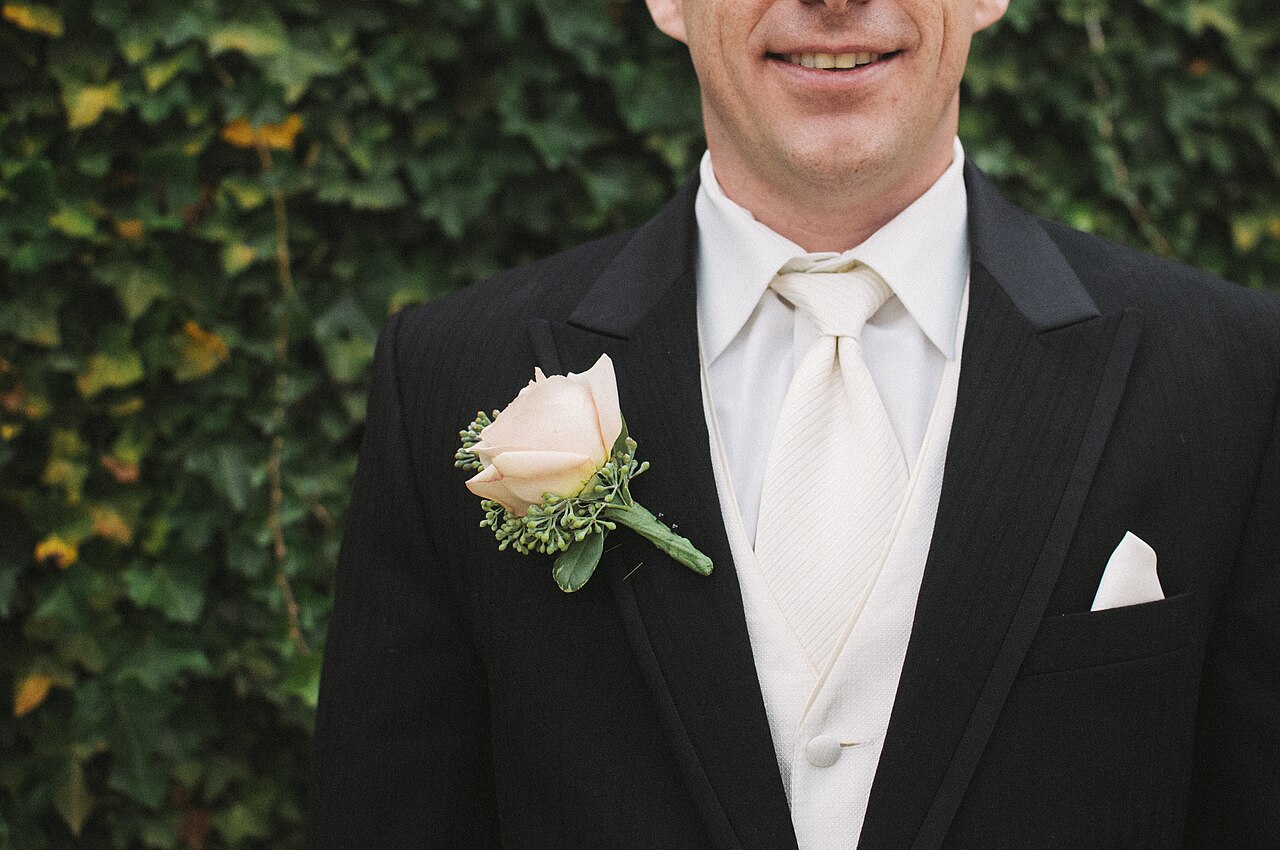
A formal base comes first, personality comes second. Here is how the creative black tie dress code works and how to build an outfit that honors both halves.
Creative black tie sounds like a contradiction, but it has a settled meaning. The Emily Post Institute describes it as attire with a black-tie foundation plus room for creativity and flair, which keeps the formality of black tie while letting textures, colors and accessories personalize the look. In practice, you dress for a formal evening first, then add personality on top of that base. Understanding that order solves most of the confusion this dress code causes.
Where Creative Black Tie Sits on the Formality Scale
Black tie sits slightly below white tie and above business attire, and it shows up more than any other formal code at weddings, proms, formal dinners and nights at the theatre. Creative black tie is not a step below black tie. It sits on the same rung; the creative part changes what the outfit looks like, not how formal it is.
One notch down sits black tie optional, which trades one required look for a choice between formal options. Below that comes semi-formal, described as dressier than office attire yet a notch short of what you would wear to a formal event. Timing matters at that level: if an event starts after 6 in the evening, err on the side of formality.
If dress codes in general read like a foreign language, our primer on formalwear terms to know before you shop or rent walks through them from casual up to white tie.
How It Differs From Black Tie and Black Tie Optional
The three codes are easiest to compare side by side.
| Dress code | The baseline | Room for personality |
|---|---|---|
| Black tie | Black tux with matching trousers and bow tie, black cummerbund or vest, black patent shoes | Very little beyond fit and jewelry |
| Creative black tie | The same formal foundation | Textures, colors and accessories are invited |
| Black tie optional | Tuxedo or dark suit for men; gown, cocktail dress or dressy separates for women | The code itself offers choices |
With plain black tie, the formula is specific: a tuxedo in black with a jacket and trousers cut from the same cloth, a black bow tie in silk, satin or twill, a black cummerbund that coordinates with the tie or a vest instead, black patent shoes and black dress socks. Dressy braces are optional. When the season is warm, the setting tropical or the event a cruise, a white dinner jacket with black tuxedo trousers is the accepted variation.
Creative black tie keeps that skeleton but expects you to flesh it out. The example Emily Post gives for men is a bow tie and cummerbund that match in color or pattern. Black tie optional works differently: instead of decorating one required outfit, it lets guests choose between a tuxedo and a dark suit with a conservative tie, or between a formal gown, a shorter cocktail dress and dressy separates.
What Works: A Formal Base, Playful Details
Think of the outfit in two layers. The first is the formal foundation: a dinner jacket and trousers or a polished dark suit, a white dress shirt, polished dress shoes and dark socks for men, and a floor-length gown, a cocktail dress at calf-length or longer, or a tailored jumpsuit or pantsuit in a formal fabric for women.
It also helps to know how far the flexibility goes. Men are not required to wear a tuxedo under this code, and women are not expected to wear long ball gowns. What you cannot drop is the formality itself; the personal touches sit on top of a polished, dressy outfit, never in place of one.
The second layer is where the code earns its name. Men can reach for richly colored velvet jackets, burgundy suits, textured or colorful vests, satin lapels, bright socks, vibrant cufflinks and pocket squares. Women can consider a metallic dress, a bright cocktail dress, a long dress with patterns or sequins, or fabrics such as velvet, satin and silk. A statement necklace, a bold clutch or distinctive shoes can finish the look.
The balancing rule shows up in every serious take on this code: pick a few standout pieces and keep the rest polished. If everything is a statement, nothing is, and the outfit drifts from creative to chaotic. Fit does the quiet work here. A well-tailored outfit looks better than something too loose or too tight no matter how bold the color, so leave room in the budget for alterations if the base layer needs them.
Styling tip
Choose one standout element, such as a colored jacket, a metallic dress or a bold accessory, and keep the rest of the outfit subdued. One statement reads as intentional; three at once read as a costume.
A Worked Example, for Illustration
Picture two guests at the same creative black tie gala. The first wears black tuxedo trousers, a crisp white dress shirt, a deep green velvet dinner jacket, a patterned bow tie and a matching pocket square, and polished black shoes. The formal base is intact, and the personality lives in the jacket and tie.
The second wears a calf-length satin dress in a rich jewel tone with simple heeled sandals and a small clutch. The base is formal in length, fabric and polish, and the personality comes through color and shine. Neither guest broke the code, and neither disappeared into a crowd of black. That is the whole exercise: formal bones, personal details.
What to Skip So You Don’t Under- or Overdress
The most common mistake is dressing too far down. Watch for these:
- An unchanged office suit with a work tie. A dark suit can work here, but only when it is sharpened with a fun tie, pocket square or other deliberate detail.
- Hemlines that read cocktail. Anything above the knee is better suited to a less formal event, so keep formal hems at calf-length or longer.
- Scuffed or casual shoes. Polished dress shoes and dark socks are the baseline; creative versions can play with color but not with wear and tear.
- Stacked statement pieces. A metallic dress plus a statement necklace plus bold shoes plus a bright clutch crowds the outfit instead of styling it.
- A poor fit. Too loose or too tight undermines even the best color choices.
Overdressing is the rarer error, but it exists. An outfit with zero personality ignores half of what the code asks for, since creative black tie specifically invites personal touches. If your look could pass at a plain black tie event with nothing changed, you have left the invitation’s intent on the table.
Creative Black Tie for Weddings, Galas and Parties
For weddings, the invitation and the time of the ceremony are the best guides to formality. An evening wedding where the invitation states black tie calls for a tuxedo; without that wording, a dark suit is the evening standard for men, while women can choose a long evening dress or a dressy cocktail dress depending on local customs. When the code reads creative black tie, the couple is asking for formal attire with visible personality, so keep the base formal and put the flair in the details they invited.
Black is a frequent question at weddings. Etiquette around it has loosened, and we sort through the old warnings in our article on whether you can wear black to a wedding.
Galas, proms and formal dinners run on the same logic with less emotion attached, because nobody is interpreting a couple’s preferences. Budget deserves a mention here too. Rather than buying a one-night costume, consider an occasion dress you can wear again, choosing a rich solid or a formal fabric that restyles for future events, and putting the savings toward fit. If the colorful half of the code feels out of character for you, our guide to wearing bold color with confidence covers ways to test brighter shades without feeling exposed.
Reading the Rest of the Invitation for Clues
The dress code line rarely stands alone. Start with the time: an event after 6 in the evening leans formal. Then look at the venue and season. Warm-weather dates, tropical destinations and cruise settings carry their own convention for men, the white dinner jacket, and a ceremony in a house of worship is a serious occasion where guests’ clothing should match the setting.
Wording offers clues as well. Traditional etiquette keeps attire instructions off the wedding invitation itself, though “Black tie” may be printed in the lower right corner of a reception invitation when needed. If a host writes out “creative black tie” anywhere on the invitation or its enclosures, that choice was deliberate, so take the creative half seriously instead of defaulting to plain black tie.
When the invitation names a venue, look it up. A hotel ballroom, a museum and a backyard push the same code in slightly different directions, and the setting tells you how much sparkle, structure and coverage will feel right. If doubt remains after all of that, asking the host or a member of the wedding party is a reasonable move; hosts would rather answer one question than watch a guest sit uncomfortably in the wrong outfit.
Style notes
- Creative black tie keeps the formality of black tie while inviting textures, colors and accessories that personalize the look.
- Men are not required to wear a tuxedo under this code, but a dinner jacket or polished dark suit with dress shoes is still the expected base.
- For women, a gown, a calf-length-or-longer cocktail dress, or a tailored jumpsuit or pantsuit in velvet, satin or silk works well.
- Limit the outfit to a few standout pieces and make sure everything fits; tailored beats loud at this formality level.
- The invitation’s time, venue and wording offer clues, and if doubt remains, asking the host is a reasonable move.
Style Q&A
Do I have to wear a tuxedo to a creative black tie event?
No. A well-fitted dark suit with a fun tie, pocket square or statement watch can work, as long as the overall look still reads formal. If you own or can rent a tux, it remains the safest base.
Can I wear a short dress to a creative black tie event?
A cocktail dress can work if it is dressy, but keep the hem at calf-length or longer for a formal event. Anything that hits above the knee reads as a less formal code.
Is creative black tie the same as black tie optional?
No. Black tie optional gives you a choice between formal levels, such as a tuxedo or a dark suit. Creative black tie holds one formal level and asks you to personalize it.
How creative is too creative?
Keep the base strictly formal and add one or two personality pieces, such as a colored jacket or a bold accessory. If everything is a statement, the outfit stops looking intentional.