
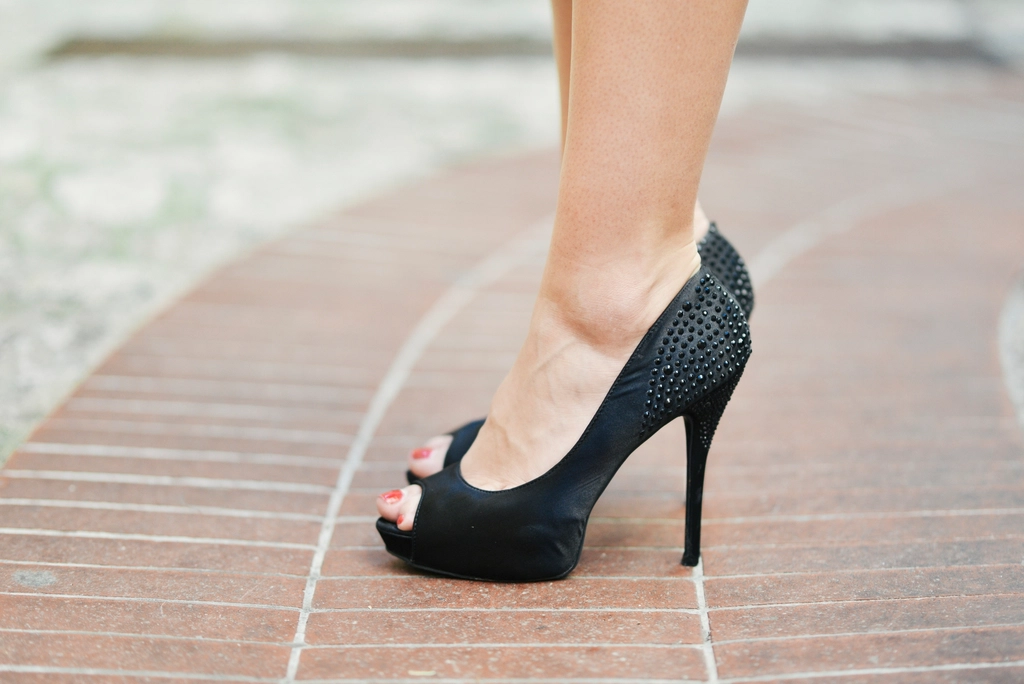
Both shoes can work for the office, but they suit different dress codes, commutes and feet. Here is how pumps and flats compare on the things that matter day to day.
Pumps and flats are the two default answers to office footwear, and most of us end up owning both at some point. Which one deserves your money and your daily wear depends on your dress code, your commute and how your feet feel at 3pm. Here is a side-by-side look at both options, so you can decide what belongs in your closet rather than what the trend cycle says.
What Each Choice Signals by Workplace
Pumps carry a formal reputation. In conservative offices, especially ones that lean toward business professional or suit-and-client settings, a classic pump reads as polished and put-together. That said, polished flats meet the same standard in most of these offices. What tends to cause problems is not the lack of a heel but the style of the flat: scuffed ballet flats or anything that looks like a sandal reads casual even when the rest of the outfit does not.
In business casual and hybrid workplaces, flats often have the edge simply because nobody is expecting heels. A clean pair of loafers or pointed flats works with the same outfits as pumps, including the blazers and trousers we cover in our blazer or cardigan comparison. If you are still figuring out what your office expects day to day, our guide to business casual outfit ideas shows how the same pieces dress up or down, and shoes are usually the dial that decides it.
Comfort Over an Eight-Hour Day and Commute
Neither option wins on comfort by default. What actually decides how you feel by the afternoon is the pitch of the shoe, how wide and stable the base is, and whether there is cushioning under the ball of your foot. A thin stiletto concentrates your weight on a narrow base and a tight forefoot, while a paper-thin ballet flat leaves you feeling every hard floor tile by mid-afternoon. In practice, a cushioned closed flat or a low block heel with a secure strap tends to outlast both extremes.
The commute is its own variable. If you walk, stand on transit or climb stairs as part of your trip, flat shoes make the trip easier and safer. A common approach among heel wearers is to commute in supportive shoes and change at the desk, which cuts down the total hours your feet spend in heels. Flats also spread body weight more evenly across the foot, which reduces strain on the heels, knees and lower back over a long day of walking between meetings.
Heel Height, Toe Shape and All-Day Fit
For pumps, height is the biggest lever. Podiatrists with the American Podiatric Medical Association recommend avoiding heels higher than two inches, because heels of three inches or more shift body weight forward onto the ball of the foot and the toes. Kitten heels, typically under one inch, deliver a little height without that pressure, and a block heel or wedge distributes weight more evenly than a thin stiletto. A pointy closed toe is the hardest combination on your feet, so if you love the silhouette, look for a generous toe box and extra cushioning at the front.
Flats have fit traps of their own. Because there is no heel to anchor the back of the shoe, sizing matters more than people expect. A flat that slips at the heel makes you grip with your toes all day, and a flat that pinches across the widest part of your foot gets miserable fast. Our guide to what to do when new shoes feel too tight walks through your options before you give up on a pair. For a side-by-side summary:
| Factor | Pumps | Flats |
|---|---|---|
| Dress code range | Strongest in formal and client-facing offices | Works in business casual and most formal codes when the style is polished |
| Long days on your feet | Manageable at two inches or less; stilettos wear out fast | Generally easier, provided there is real cushioning underfoot |
| Commute friendliness | Better with a change-at-the-desk plan | Better as an all-day, door-to-door choice |
| Common fit issues | Forefoot pressure, heel slip in slingbacks | Pinching across the toe box, rubbing at the heel |
| Foot health notes | Daily wear can shorten the Achilles tendon over time | Can aggravate plantar fasciitis if the arch support is lacking |
| Suits best | Days that are mostly seated, or desk-to-dinner plans | Long commutes, standing-heavy roles, walking between meetings |
Foot Health Considerations for Daily Wear
Your foot is a complicated structure: 26 bones, 33 joints and a network of more than 100 tendons, muscles and ligaments. Years of constrictive or high-heeled shoes contribute to problems like bunions, calluses and hammertoes, and heel pain is frequently linked to plantar fasciitis, an inflammation of the band of tissue running along the bottom of the foot. That condition is often aggravated by shoes that lack proper support, especially in the arch, which is a real risk in minimal ballet flats.
The APMA has surveyed women about footwear and foot pain, and the numbers tell a story worth knowing. Nearly half of women wear high heels, but 71 percent of heel wearers say the shoes hurt their feet. Only two percent of women wear heels every day, and that restraint makes sense: podiatrists warn that daily heel wearing can cause the Achilles tendon to shorten, which raises your injury risk when you switch to flat shoes or exercise. Flats are not exempt from complaints either, with 23 percent of women reporting discomfort from them, often from thin soles and no arch support.
If a pair hurts enough that you notice it, inserts can help. Full-foot inserts or metatarsal pads add cushioning, and over-the-counter orthotics may work just as well as custom versions for many people. Prescription orthotics, made after a podiatrist evaluates your feet, are built for specific problems and often last many years, and insurance frequently helps cover them. One practical shortcut while you shop: the APMA grants its Seal of Acceptance to footwear a panel of podiatrists has reviewed for promoting foot health, and you can check the list on the APMA website.
Styling tip
If your day involves more than a couple of hours of standing or a lot of walking, reach for the cushioned flat or the lowest heel in your closet. Save the taller pumps for seated days and events.
Cost Per Wear and How Long Each Pair Lasts
Cost per wear is simple arithmetic: what you paid divided by how many times you wore it. A reasonably priced flat that you wear three days a week for two years beats an expensive pump that comes out for client meetings a handful of times a year. The catch is that construction quality drives the math in both directions. A cheap pair that loses its shape in a season can cost more per wear than a well-made pair you keep for years, whether that is a pump or a flat.
Longevity also depends on how you treat the shoes. Soles and heel tips wear down with pavement miles, so commuters go through pairs faster than people who drive to work. Conditioning leather, letting shoes dry fully between wears and getting worn heel tips replaced before they damage the shoe all stretch the timeline. If you are weighing sole types as part of that decision, our comparison of leather soles versus rubber soles breaks down the trade-offs in grip, repair and cost.
Building a Small Rotation Instead of One Pair
The strongest setup for most people is not a single perfect shoe but a small rotation. Two or three pairs, one of each type, covers nearly every workday:
- A cushioned closed flat or loafer for commute-heavy and standing-heavy days
- A low pump or kitten heel, two inches or under, for meetings and more formal settings
- A block heel option if you want polish with more stability than a stiletto
Rotation helps the shoes as much as your feet. Alternating pairs gives each one a full day to dry out from moisture and pressure, which slows breakdown of the insole and lining. It also varies the pressure points on your feet so no single spot takes the pounding day after day.
If you are starting from scratch, buy the flat first. It fits the widest range of dress codes, survives the commute and pairs with the trousers, skirts and dresses already in your closet. Add the pump once you know how often your weeks actually call for one, and let the wear counts, not the instinct to buy a matching set, decide the second purchase.
Style notes
- Podiatrists recommend avoiding heels higher than two inches, since three inches or more shifts body weight onto the ball of the foot and toes.
- Daily heel wearing can shorten the Achilles tendon over time, so most people are better off rotating pumps with flats rather than wearing heels every day.
- Flats are not automatically comfortable; a paper-thin ballet flat can leave your arches aching, so cushioning and construction matter as much as the heel height.
- A cushioned closed flat or a low block heel with a secure strap generally holds up better over a long day than a stiletto.
- Cost per wear favors the pair you actually reach for most often, which is why a small rotation usually beats one expensive pair.
Style Q&A
Are flats appropriate for a formal office?
In most workplaces, yes, as long as they are a polished style like loafers or closed-toe flats in good condition. Very casual styles such as flip-flops or worn ballet flats are the ones that tend to read as too casual.
What heel height is best for everyday office wear?
Podiatrists recommend staying at two inches or below for heels worn regularly. Kitten heels, which are typically under one inch, give you a bit of lift with much less pressure on the ball of the foot.
Is it bad to wear the same shoes every day?
Rotating between two or three pairs gives shoes time to dry out between wears and keeps your feet from repeating the same pressure patterns daily. It also slows wear on the soles and heels, which stretches your budget.
Do insoles help make office shoes more comfortable?
They can. Full-foot inserts or metatarsal pads add cushioning, and over-the-counter orthotics may work as well as custom versions for many people. If foot pain persists, a podiatrist can evaluate whether prescription orthotics make sense.